
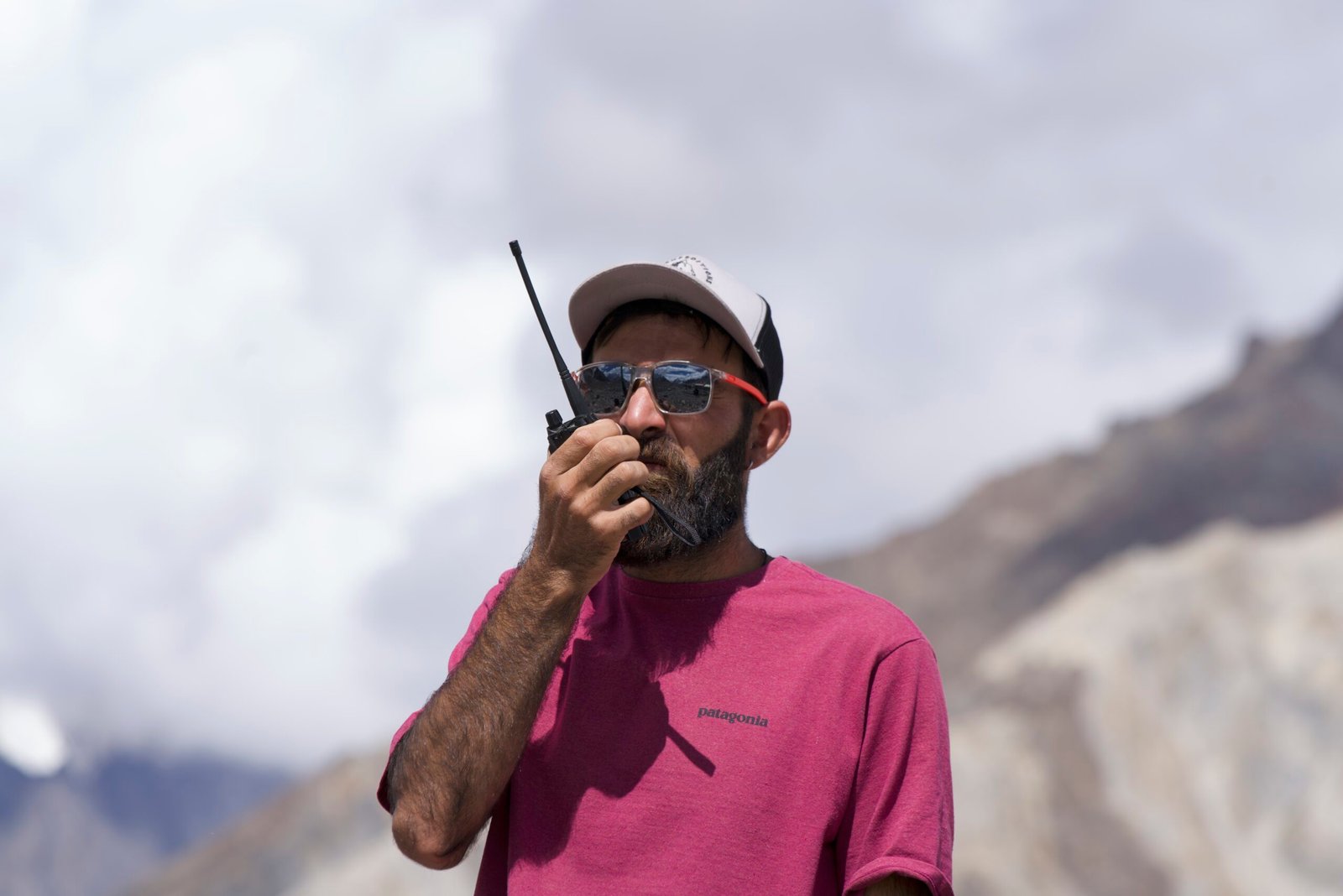
One of the most common questions we get at Moving Mountains is about the signal and comms available on the trail. In an era where “out of office” doesn’t always mean “out of touch,” trekkers want to know: Can I call home from the Baltoro?
The answer is a mix of high-tech progress and deep-wilderness reality. While the Karakoram remains one of the most remote places on Earth, staying connected is more possible now than ever before — if you have the right setup.
Here is the definitive guide to communication and power logistics for your K2 Base Camp journey.
1. Local Connectivity: The SCOM Advantage
In Gilgit-Baltistan, the traditional national carriers (like Telenor or Zong) often struggle. The king of the north is SCOM (Special Communications Organization).
•Where it works: You’ll have solid 4G signal in Skardu and most villages along the Karakoram Highway. Once you start the trek from Askole, the signal vanishes quickly.
•The “K2 Tower”: In a feat of engineering, SCOM installed a solar-powered 4G tower at Concordia and K2 Base Camp. In peak season, it is often possible to send a WhatsApp or make a brief call from the “Throne Room of the Mountain Gods.”
•The Reality Check: Do not rely on this – consider it a bonus if it works but not a given. The tower is solar-powered and weather-dependent; if it’s been cloudy for three days, the signal may go dark.
•Pro Tip: Pick up an SCOM “Tourist SIM” in Skardu before heading out if having signal is mandatory for you. You’ll need your passport and visa copy and it will take a few hours for it to be activated.
2. Satellite Communications: Thuraya vs. Iridium
For true emergency backup or guaranteed communication, satellite technology is the only way. However, Pakistan has specific regulations you need to know. We carry sat phones on all our expeditions in case of emergency.
Thuraya
Thuraya is the most popular choice in the Karakoram because its satellites are geostationary over the region.
•Pros: Generally cheaper hardware and airtime; very reliable signal in the deep valleys of the Baltoro.
•Cons: You need a clear line of sight to the south.
Iridium
Iridium uses a low-earth orbit (LEO) network, meaning its satellites are always moving.
•Pros: 100% global coverage; works even in narrow gorges where Thuraya might struggle.
•Cons: More expensive; signal can occasionally “drop” as one satellite passes and the next takes over.
The Garmin inReach Factor
Devices like the Garmin inReach are game-changers for two-way texting and GPS tracking.
•Legality: While these devices are legal in Pakistan (unlike in neighboring India, where they are strictly banned), they must be declared and sometimes registered with your trekking permit.
•Usage: They are perfect for sending daily “I’m safe” pings to family without the bulk of a full satellite phone as well as keeping family aware of your GPS location.
3. Power Logistics: Charging at 5,000 Meters
Having the best tech is useless if your battery dies on Day 4. In the Karakoram, your primary fuel is the sun.
•Solar Panels: We recommend a 21W to 28W portable solar charger (like BigBlue or Anker). These can be strapped to the top of your pack or laid out at camp during sunny afternoons.
•Power Banks: Bring a 20,000mAh power bank. The cold drains batteries rapidly; sleep with your phone and power banks inside your sleeping bag to preserve their life.
•Moving Mountains Support: On our expeditions, we provide central charging stations in the mess tent powered by solar arrays and generators, but having your own small backup is always wise for personal devices.
4. A Note on Digital Detox
While we’ve spent this guide talking about how to stay on, the greatest gift of the Karakoram is the ability to turn off.
Standing at Concordia, surrounded by the world’s highest peaks, is a sensory experience that no screen can replicate. Use your tech for safety and health, and perhaps a quick photo to home, but don’t forget to look up.