
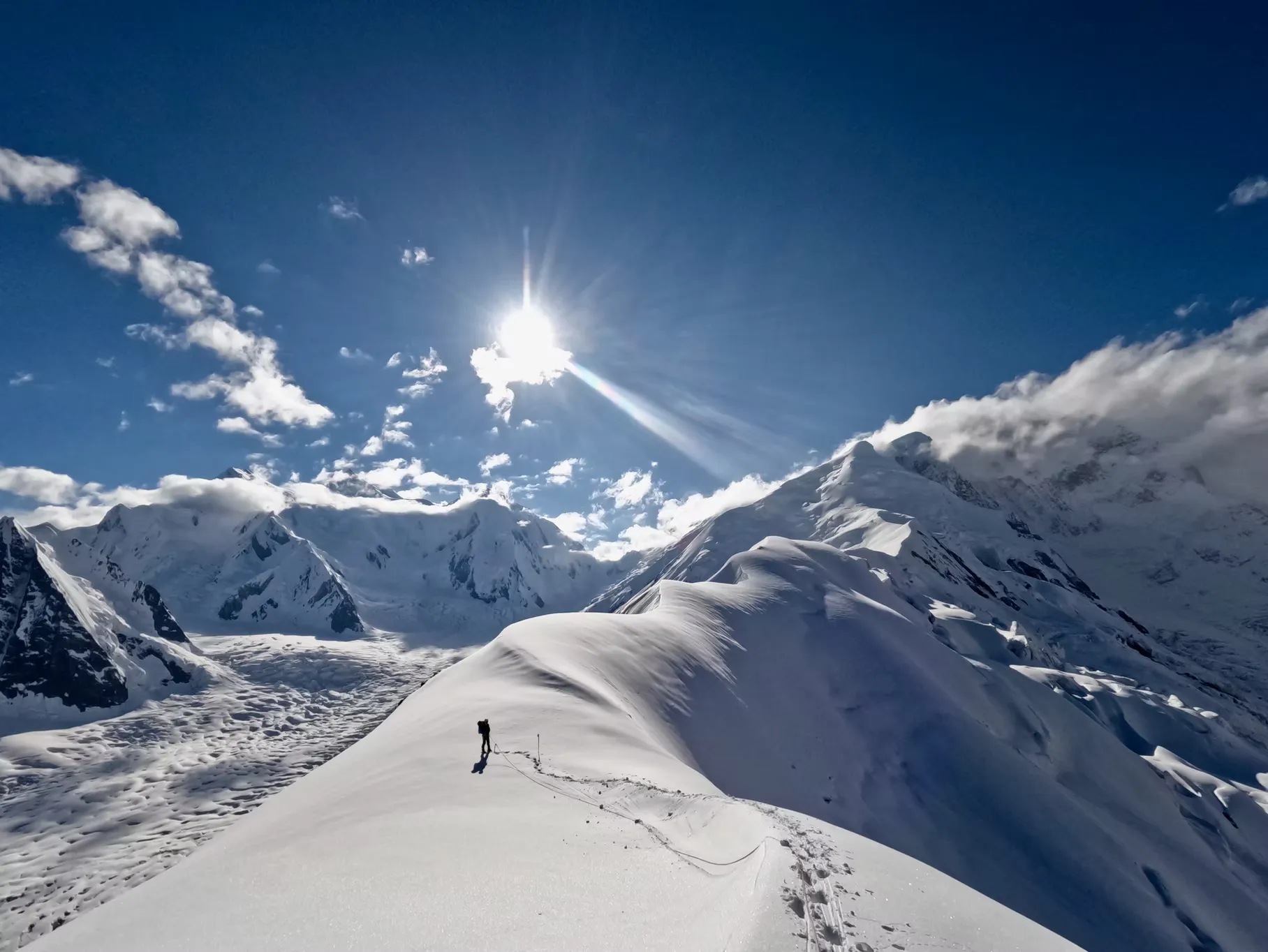
So, you’ve conquered the K2 Base Camp, perhaps even crossed the Gondogoro La. The high-altitude bug has bitten, and now you’re looking beyond trekking—you’re ready for your first 7,000-meter peak. Spantik (7,027m), often called the “Golden Peak,” is an exceptional choice for this transition, offering a challenging yet achievable step into true mountaineering. But what exactly does that step entail? What skills do you need to master to safely and successfully stand on a 7,000m summit?
At Moving Mountains, we understand that the leap from trekking to climbing can feel daunting. That’s why we’ve broken down the essential technical skills required for Spantik’s Southeast Ridge—a route known for its relative accessibility but serious high-altitude demands The Ultimate Guide to Climbing Spantik Peak (7027m). This isn’t about becoming an expert alpinist overnight; it’s about building a solid foundation that will serve you well on Spantik and beyond.
1. Glacier Travel & Crevasse Awareness: Navigating the Ice Highway
The Karakoram is a land of immense glaciers, and Spantik is no exception. A significant portion of the climb, particularly to Camp 1 and Camp 2, involves traversing glaciated terrain. This isn’t just walking on ice; it requires a specific skillset:
•Roped Travel: Moving as a team, roped together, is fundamental for safety on glaciers. This prevents individuals from falling into hidden crevasses and allows for immediate team-based rescue 2.
•Crevasse Awareness: Learning to identify potential crevasse zones, understanding snow bridges, and knowing how to move efficiently and safely across them is paramount. Our guides are experts in this, but understanding the principles yourself is crucial.
•Crampon Technique: Proficiency with crampons is non-negotiable. This includes walking on varied snow and ice angles (flat-footing, French technique, front-pointing) and understanding how to prevent and recover from slips 3.
2. Fixed Rope Travel & Jumaring: Ascending with Confidence
While Spantik’s Southeast Ridge is not overly technical, there will be sections, particularly on steeper slopes or exposed areas, where fixed ropes are installed. Mastering the use of these ropes is a key mountaineering skill:
•Jumaring: This involves using mechanical ascenders (jumars) to climb a fixed rope. You’ll need to be comfortable attaching and detaching from the rope, managing your safety lines, and ascending efficiently while carrying a pack 4.
•Rappelling/Abseiling: Descending fixed ropes safely using a belay device is equally important. This requires proper setup, communication, and maintaining control, especially when tired or in challenging conditions.
•Self-Belay/Clipping In: Understanding how to clip into fixed lines with your safety lanyards for continuous protection is vital for moving safely across exposed sections 4.
3. Ice Axe Proficiency: Your Third Leg on the Mountain
Your ice axe is more than just a walking stick; it’s a critical safety tool. On Spantik, you’ll use it for balance, self-arrest, and potentially for anchor building:
•Self-Arrest: The ability to stop an uncontrolled slide on a snow or ice slope using your ice axe is perhaps the most crucial safety skill. Practice in various positions (head-first, feet-first, on your back) is essential 3.
•Balance & Support: Using the axe for stability on steep terrain, for chopping steps, or for probing snow depth are all fundamental applications.
•Anchor Building (Basic): While guides will typically manage complex anchors, understanding basic snow and ice anchors can be beneficial for personal safety and group support.
4. High-Altitude Camp Craft & Self-Sufficiency: Life Above the Clouds
Above Base Camp, you’ll be living in a harsh, high-altitude environment where self-sufficiency is key. This involves more than just pitching a tent:
•Tent Management: Efficiently setting up and securing a four-season tent in windy or snowy conditions, managing gear inside, and preventing condensation buildup.
•Stove Management: Safely operating a high-altitude stove for melting snow for water and cooking in a confined space. This is crucial for hydration and nutrition 5.
•Personal Organization: Keeping your gear organized, protecting electronics from cold, and managing personal hygiene in extreme conditions are vital for comfort and health over multiple weeks.
5. Expedition Pace & Mental Fortitude: The Inner Game
While not a technical skill in the traditional sense, understanding and maintaining an efficient expedition pace, coupled with unwavering mental resilience, is paramount for success on Spantik:
•Slow & Steady Pace: Learning to move at a sustainable pace at altitude, often called the “expedition shuffle,” conserves energy and aids acclimatization. Pushing too hard too soon is a common mistake.
•Self-Assessment: Constantly monitoring your own physical and mental state, recognizing signs of fatigue or altitude sickness, and communicating openly with your guides is a critical skill.
•Patience & Perseverance: High-altitude climbing involves long days, bad weather, and periods of waiting. The ability to remain patient, positive, and focused on the ultimate goal is a hallmark of successful mountaineers.
Your Journey from Trekker to Climber Starts Here
Spantik is a serious mountain, but it’s one that rewards preparation and respect. By focusing on these five essential skills, you’ll not only increase your chances of a successful summit but also build a robust foundation for a lifetime of high-altitude adventures. Our Spantik expeditions are designed to teach and reinforce these skills, guided by our local experts who have an intimate knowledge of the Karakoram.
Ready to take the next step? Explore our Spantik Expedition details and let Moving Mountains guide you to your first 7,000m summit.